
The starter was an elderly man with a clipboard and the authority of someone who had seen things.
He looked at my group the way lifeguards look at storms.
He handed us our cart number, our tee time, and a quiet warning disguised as a smile.
“Have a good round.”
I did not.
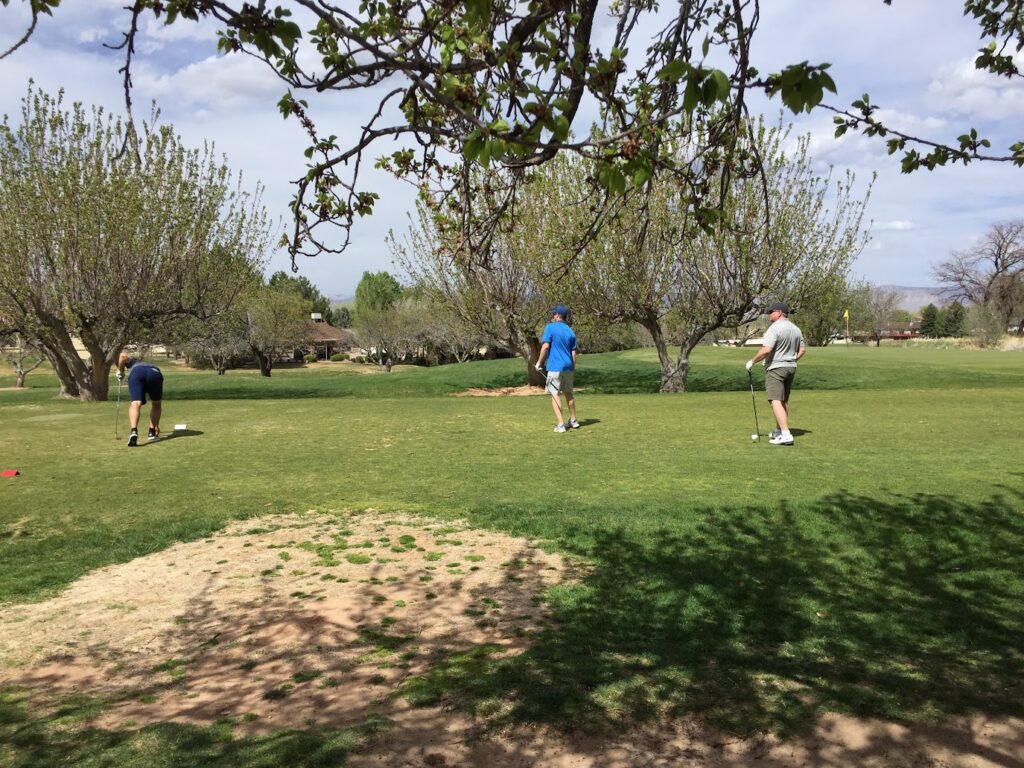
It began on the first tee, where confidence goes to be publicly corrected. I addressed the ball like a man who had watched golf once in an airport bar.
I swung.
The ball hit the tee marker, ricocheted backward, and briefly became a political issue.
No one spoke.
The starter inhaled through his nose like he was processing a smell from childhood.
“Breakfast ball,” someone said.
Can you hit a breakfast ball when it’s lunchtime?
The second shot went forward, but only out of pity.
From there, the round became a live demonstration of how many ways a ball can refuse cooperation.
Trees were involved. So was water. Sand too. I covered a lot of nature.
At one point, I hit a shot that landed directly behind me. Not rolled. Flew.
A small child on a nearby fairway began asking questions.
By the fourth hole, my playing partners had stopped giving advice and started offering emotional support.
“You’re still fun to be around.” This is what people say at funerals.
On the sixth hole, I topped the ball so badly that it achieved legal residency in the tee box.
On the eighth, I three‑putted from a distance usually reserved for throw rugs.
On the tenth, I attempted a heroic shot over water that had no interest in character development.
The ball vanished.
I stood there holding my club like a broken antenna. Around hole twelve, the starter reappeared.
He drove up slowly in his cart. He did not look angry – more like concerned.
“Everything alright out here?” he asked.
I nodded in the way people do when they are being arrested politely. There is no pressure like that of hitting while the marshall is watching.
He watched me hit another shot into a tree and waited for the leaves to stop shaking.
Then he mentioned the pro and said that lessons are “pretty reasonable.”
For a moment, I thought this was kindness.
Then I realized it was a business decision.
By the final hole, my scorecard had become abstract art.
Numbers were crossed out.
Some were circled.
One might have been a phone number.
I shook hands with my group like a politician leaving office early.
At the cart return, the starter nodded at me.
“Rough day?”
I said, “It builds character.”
He said, “So does jail.”
I smiled. “So about those lessons.”